


GRAP 4 Construction Ban: Impact on Builders & Homebuyers
GRAP 4 Construction Ban in Delhi NCR: An Industry Under Pressure
The GRAP 4 construction ban in Delhi NCR has once again brought the real estate and construction industry to a sudden halt. Implemented during severe air pollution episodes, this government-mandated restriction stops construction and demolition activities, directly impacting builders, homebuyers, and the entire construction materials supply chain.
While the intent is to protect public health, the consequences of the GRAP 4 construction ban in Delhi NCR extend far beyond construction sites. In fact, builders, homebuyers, manufacturers, suppliers, and daily-wage workers are all facing significant operational and financial challenges.
This article takes an analytical look at how the ban is impacting each stakeholder—and why a more balanced approach is urgently needed.
What Is GRAP 4 and Why Construction Is Banned ?
Graded Response Action Plan (GRAP)
GRAP 4 is implemented when air quality in Delhi NCR enters the “Severe+” category. At this stage, authorities enforce strict measures, including:
-
Complete ban on construction and demolition activities
-
Restriction on entry of trucks carrying construction materials
-
Suspension of infrastructure and real estate projects
-
Heavy penalties for non-compliance
As a result, even compliant and well-managed construction sites are forced to shut down abruptly.
How the GRAP 4 Construction Ban Is Affecting Builders ?
The GRAP 4 construction ban in Delhi NCR creates immediate and long-term challenges for builders:
🔹 Project Delays
Firstly, construction timelines are disrupted without warning. Even a short ban leads to weeks or months of delay due to labor remobilization and rescheduling.
🔹 Cost Escalation
Moreover, idle machinery, fixed overheads, and extended project durations significantly increase costs. Developers must absorb these expenses while still meeting regulatory deadlines under RERA.
🔹 Workforce Migration
Additionally, migrant laborers often leave the city during prolonged shutdowns, making it difficult to restart work smoothly once restrictions are lifted.
As a result, developers face a cycle of uncertainty, delays, and financial pressure.
Homebuyers Impacted by Pollution-Related Construction Bans
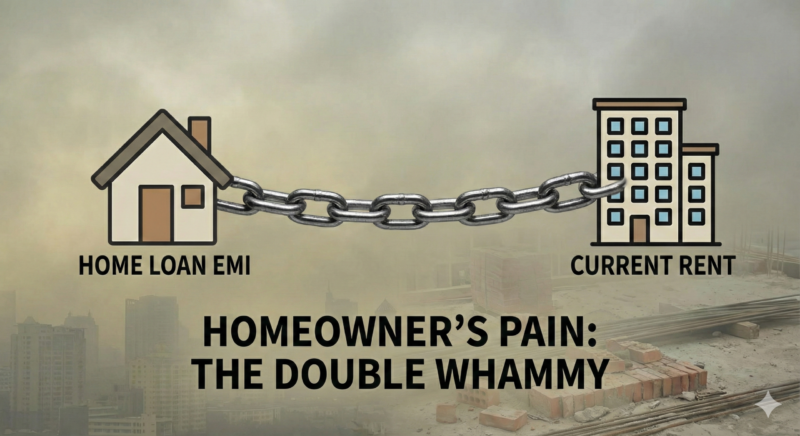
Homebuyers are among the worst-affected stakeholders.
🔹 Delayed Possession
Due to repeated construction bans, possession dates are pushed indefinitely. Buyers continue paying rent and EMIs simultaneously.
🔹 Financial Stress
Furthermore, delayed handovers increase personal financial burden without any fault of the buyer.
🔹 Emotional and Legal Uncertainty
Although RERA offers protections, frequent pollution-related stoppages make accountability unclear, leaving buyers frustrated and helpless.
In short, the GRAP 4 construction ban in Delhi NCR has turned homeownership into a waiting game.
Impact on Construction Material Manufacturers & Suppliers
The slowdown has also disrupted the supply of construction materials in Delhi NCR, impacting ongoing projects. Beyond real estate, the ban deeply affects the construction materials industry, including:
-
Cement manufacturers
-
TMT steel producers
-
AAC block plants
-
Tile, paint, and chemical suppliers
-
Aggregate, sand, and stone dust vendors
🔹 Demand Collapse
Since construction stops, material demand drops sharply. Consequently, factories slow down or shut operations temporarily. Builders are already facing challenges in cement and steel procurement during winter months.
🔹 Inventory & Cash Flow Issues
At the same time, suppliers are left with unsold inventory, blocked capital, and delayed payments.
🔹 Logistics Disruptions
Truck restrictions further disrupt supply chains, especially for regional and small-scale vendors.
Therefore, the economic impact of the GRAP 4 construction ban in Delhi NCR extends far beyond the city limits.
Is Construction the Real Culprit?
According to multiple studies, construction contributes a relatively small percentage to Delhi’s overall air pollution compared to vehicular emissions, road dust, and industrial activity.
However, construction becomes the easiest sector to regulate during emergencies.
This raises a critical question: Should a blanket construction ban be the default solution every winter?
The Need for a Balanced, Long-Term Approach
Instead of repeated shutdowns, policymakers could consider:
-
Allowing non-polluting interior works
-
Enforcing stricter on-site dust control measures
-
Promoting green construction technologies
-
Differentiating between compliant and non-compliant sites
Such measures would protect both air quality and economic stability.
Conclusion
The GRAP 4 construction ban in Delhi NCR highlights a serious policy dilemma—environmental protection versus economic continuity.
While clean air is non-negotiable, repeated construction shutdowns are creating systemic stress across real estate, housing, and the construction materials industry.
Moving forward, a smarter, data-driven, and balanced policy framework is essential—one that safeguards public health without crippling an entire ecosystem that supports millions of livelihoods.

AAC block – an innovative material for the construction industry.

Benefits of Buying Construction Materials Online In 2022
What are the Types of Cement used in House Construction
About Author
